Prineville, Ore. — Five current members of the Ochoco West Water & Sanitary Authority Board have entered stipulated final orders with the Oregon Government Ethics Commission over violations of Oregon’s Public Meetings Law, bringing at least part of a nearly year-long state investigation into the troubled special district to a close.
The orders involve current board members Dan Parks, Michael Papin, Richard Lopez, Tony Sneath and Mitch Logan, according to records reviewed by the Prineville Review. The orders are substantially identical and stem from a series of OWWSA meetings in 2024 and 2025 that were the subject of public meetings grievances and a subsequent complaint filed with the state by this publication.
In Parks’ stipulated final order, approved by the Commission on Sept. 16th, the state identifies Parks as an OWWSA director and public official subject to Oregon’s Public Meetings Law. The Commission previously found cause in December to open a formal investigation.
The settlement goes substantially further than the preliminary action taken by commissioners last December.
According to the stipulated facts, OWWSA failed to comply with numerous provisions of Oregon law during meetings held Dec. 10th, 2024, and July 1st, July 8th and July 29th, 2025. The violations involved requirements governing public notice, special meetings, executive sessions, electronic access for the public and other public-meeting requirements.
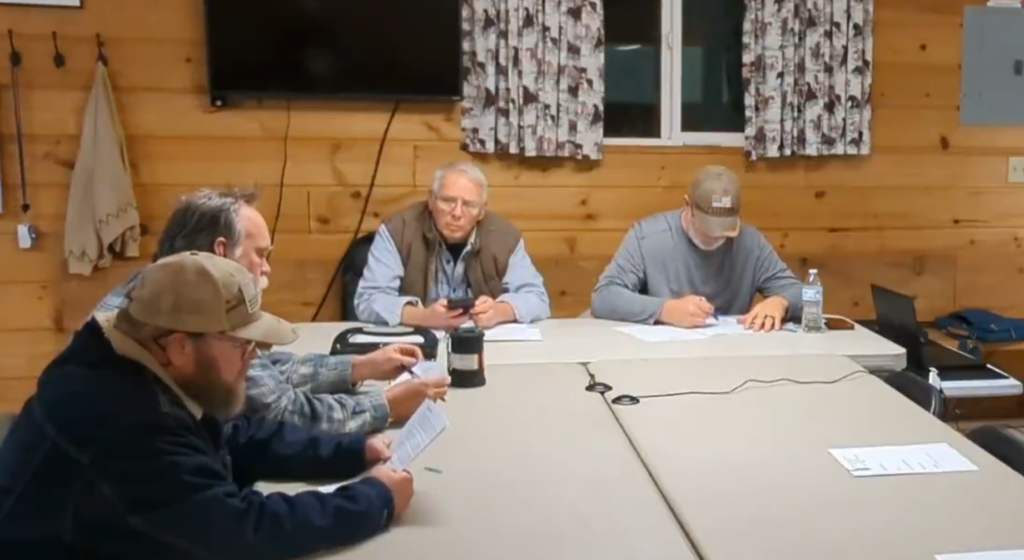
The July meetings involved Parks, Lopez, Papin, Logan and Sneath, among other directors.
The Commission concluded that Parks, as a board member, was responsible for adherence to Public Meetings Law and violated one or more provisions governing meeting notice, executive sessions, remote access and related administrative rules. The order further states that evidence gathered by investigators would establish by a preponderance of the evidence at a contested-case hearing that a violation occurred.
Parks agreed to resolve the case before completion of the investigation and will receive a letter of education in lieu of a civil penalty. The settlement also waives his right to a contested-case hearing and judicial review. The Commission approved the order Sept. 16th.

The findings largely confirm violations first documented by the Prineville Review during its reporting last year.
Violations continued despite repeated warnings
The state investigation began after months of disputes between OWWSA and the Prineville Review over the district’s meeting practices.
In July 2025, the Prineville Review reported that OWWSA held a special meeting after providing only about four hours’ notice despite being specifically warned beforehand that proceeding with the meeting would violate Oregon law. The meeting was not identified as an emergency.
The Commission’s stipulated order now expressly identifies that July 29th meeting as one where OWWSA failed to comply with ORS 192.640(3), which governs notice for special meetings, along with requirements for electronic access, media and interested-person notice and other meeting-notice provisions.
That was not an isolated incident.
The district subsequently scheduled an Aug. 12th meeting with inadequate notice before eventually postponing it after the Prineville Review raised another challenge. OWWSA publicly acknowledged at the time that the meeting needed to be rescheduled because it was “out of compliance with public meeting law.”
OWWSA also briefly placed a proposed “media screening policy” on an August agenda following the Prineville Review’s reporting and legal challenges. The proposal was removed before the rescheduled meeting after this publication raised constitutional and transparency concerns.
This editor has previously brought successful challenges in state and federal court against other public bodies in recent years for similar efforts, including most recently against the Alfalfa Fire District resulting in a federal judge’s preliminary injunction and findings of clear constitutional violations through its own access policy and illegal trespass from public meetings.
The problems continued even after the Ethics Commission voted unanimously in December to open its investigation.
In January, the district utilized a three-member hiring subcommittee to interview applicants and make a recommendation to the full board without providing public notice of those meetings. The Prineville Review subsequently filed another grievance over those actions.
The Commission’s December investigation initially covered four grievances involving meetings in December 2024 and July 2025. At the time, commissioners found a substantial objective basis to investigate the allegations but had not yet made a final finding that individual officials violated the law.
The newly approved stipulated orders change that posture for the five current directors who agreed to resolve their cases.
Court-ordered records still not fully produced
The Ethics Commission settlements also come while a separate transparency dispute involving OWWSA remains unresolved.
OWWSA has still not fully complied with a Crook County Circuit Court judgment ordering it to disclose public records to the Prineville Review, according to this publication’s review of the outstanding production.
The lawsuit followed a July 21st, 2025, records request seeking communications between OWWSA board members concerning the scheduling and agendas of meetings, along with agreements and other records involving the so-called “Ochoco West Horse Coop.”
After OWWSA failed to timely respond, Crook County District Attorney Kari Hathorn ordered the district on Aug. 19th, 2025, to provide responsive records. OWWSA did not challenge Hathorn’s order in court but failed to fully produce the requested records.
Hathorn later last year had to again order the OWWSA release additional records after it failed to release public meeting recordings.
Attorneys representing Western Media Group, which publishes the Prineville Review, subsequently sued OWWSA in Crook County Circuit Court seeking the release of records.
OWWSA failed to appear and defend the lawsuit, and in January a judge entered a default judgment and injunction requiring the district to release responsive non-exempt records. The court also ruled that the Prineville Review was entitled to recover its reasonable attorney fees and litigation costs, which have yet to be recovered.
Months later, responsive communications remain outstanding.
That continuing noncompliance is particularly notable because the records sought include communications surrounding some of the same meetings that are now the subject of the Ethics Commission’s stipulated findings.
The district has previously faced another adverse public-records ruling from Hathorn. In November, the district attorney found OWWSA had unreasonably delayed providing recorded meeting audio, improperly handled a public-interest fee waiver request and failed to tie its requested fees to its actual costs. That order required production without fees and imposed a $200 statutory penalty.
More Horse Co-op agreements revealed despite records request
Questions surrounding the Ochoco West Horse Co-op also remain unresolved.
The Prineville Review first reported last summer that OWWSA had entered into arrangements allowing the purported cooperative to operate horse-boarding facilities on publicly owned district property.
Oregon Secretary of State records reviewed by this publication showed no registered business or cooperative under that name. The Secretary of State also previously confirmed to the Prineville Review that it could locate no business filings associated with the individual identified in district records as operating the organization.
Oregon law also restricts use of the term “cooperative,” or variations of it, by entities that are not legally organized as cooperatives.
Additional records later showed that OWWSA had entered into a five-year lease in 2022 providing the Horse Co-op use of district-owned horse facilities for just $1. Parks signed that agreement for OWWSA, while Lisa Logan signed as president of the purported cooperative. Logan is the wife of current OWWSA director Mitch Logan.
The Prineville Review previously found no record of conflict-of-interest declarations by Parks or Logan concerning subsequent board decisions involving the arrangement last year. That included the decision to continue to allow the unregistered organization to continue operating despite the Board even acknowledging the group needed to be registered.
Parks was also discovered to have made the decision in 2022, despite Logan reportedly working as his secretary as part of other employment, which would implicate other provisions of Oregon ethics laws.
The board again discussed contracting with the Horse Co-op in February, despite the continuing questions about its legal status.
Now, a recent OWWSA meeting revealed that additional agreements involving the Horse Co-op related to utility services existed and were never provided to the Prineville Review, despite the publication’s records request specifically seeking newly executed agreements, interim agreements, memorandums of understanding, and proposed agreements involving the organization.
Those records fall squarely within language used in the July 2025 request, which sought not only the recently terminated Horse Co-op agreement but “any newly executed agreements or interim agreements or documents of understanding, as well as proposed agreements.” Hathorn’s subsequent order required OWWSA to provide responsive records in its custody or control.
The discovery of additional agreements raises new questions about the completeness of OWWSA’s prior records production and its continuing compliance with both Hathorn’s order and the subsequent Circuit Court order.
The Prineville Review is now preparing to seek further
Years of broader governance concerns
The public meetings violations represent only one part of broader scrutiny surrounding OWWSA.
Previous Prineville Review reporting has documented questions surrounding district property held outside its water and sanitary functions, its longstanding relationship with the private Ochoco West Property Owners Association, restrictions on access to publicly owned property and Joe Fisher Reservoir, and warnings from the district’s insurer concerning property that was not related to OWWSA’s statutory functions.
Records and whistleblower documents obtained last year also raised questions surrounding former manager Ray Horton’s alleged use of district funds for personal purchases and allegations of nepotism involving current manager Jamie Helms’ employment of her spouse.
The district has also fallen years behind on required financial audits. As of the Ethics Commission’s December proceedings, OWWSA had acknowledged nearly three years of missing audit reports and had not publicly reviewed or approved its fiscal year 2023 audit.
The latest Ethics Commission orders provide the first final state disposition of several of the public-meeting violations uncovered during that broader investigation.
Mr. Alderman is an investigative journalist specializing in government transparency, non-profit accountability, consumer protection, and is a subject matter expert on Oregon’s public records and meetings laws. As a former U.S. Army Military Police Officer, he brings a disciplined investigative approach to his reporting that has frequently exposed ethics violations, financial mismanagement, and transparency failures by public officials and agencies.