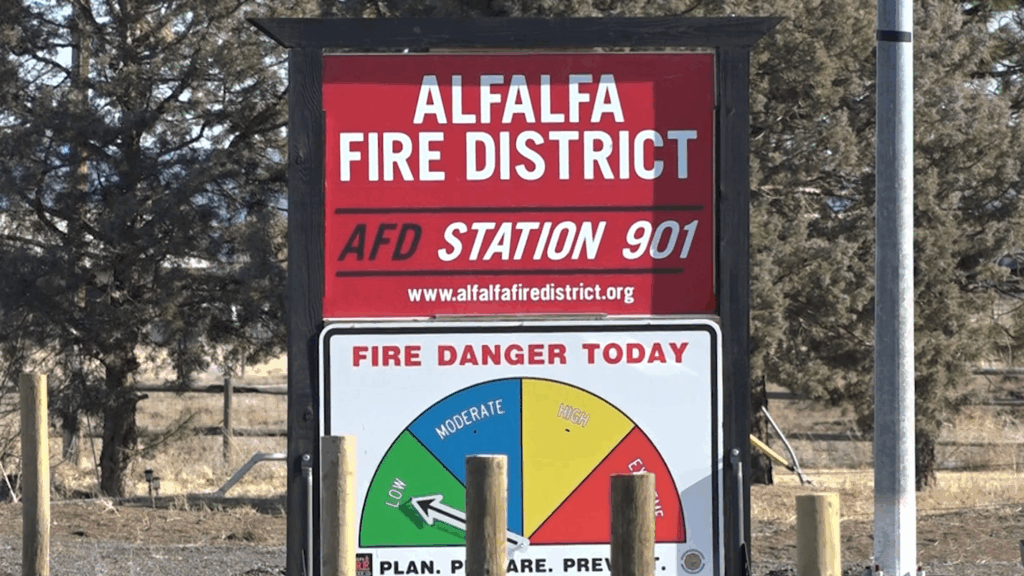
Alfalfa, Ore. — The Alfalfa Fire District has finally released some of its 2026 bank records to the Prineville Review following weeks of delays, revealing nearly $90,000 in checks, a $157,420 FEMA deposit and thousands in other spending — but significant records needed to determine where some of the money went remain missing.
Among the newly revealed transactions is a $37,109.70 check that cleared nearly a month after Chad LaVallee ceased serving as chief — a payment the Prineville Review could find no record of being discussed or authorized in district meeting minutes reviewed.
A review of the district’s primary operating account ending in 3218 found 59 checks totaling $89,237.64 between January and August.
But the statements provided by the district do not include the check images, meaning the records provided do not identify who received nearly $90,000 in district payments or what many of those checks were for.
The bank records also appear to account for payroll payments which were listed as Intuit, reportedly for the wages and tax obligations paid to LaVallee and his wife. After his wife resigned in February, the payments appeared to only be for one person, but March statements again resumed for two debits for Intuit payroll wages and taxes.
The statement identifies the payment only as check No. 2239. It does not show when the check was written, who received it or what it was for. The Prineville Review could also find no record in any district meeting minutes reviewed of the $37,109.70 payment being discussed or authorized by the board.
Because the district did not provide the corresponding check image, who received the money and what it was for remain unknown.
The check alone represents more than 40% of all check payments appearing in the operating account between January and August.

But the records raise an even bigger question: Where did all the district’s money go?
Based on the accounts produced so far, the district appears to have had little money remaining before a recent FEMA deposit. Without that deposit, the district’s available funds would have been effectively depleted — even before paying roughly $165,000 still owed for equipment purchased under a previous FEMA grant.
It remains unclear whether the recent FEMA deposit is connected to that same grant. But if the records produced account for all of the district’s money, they paint a stark financial picture of a district that otherwise had almost nothing left.
District still hasn’t provided all records
The records come after repeated delays by the district in responding to an Aug. 17th public records request from the Prineville Review.
District legal counsel Jered Reid originally indicated the records would be provided by Sept. 8th. That date passed without production, and the Review previously reported on the records dispute after the district failed to provide another estimated completion date.
Reid finally provided records Monday that he described as monthly bank statements for “all 2026 bank accounts for the Alfalfa Fire District.”
But even Reid acknowledged they were not the normal PDF statements available through First Interstate Bank.
He said the records were provided to him by the bank in that form and that he would work to obtain the normal statements.
A review of the production quickly found more records were missing.
That includes the check images, several months from the district’s Juniper Acres tax account and statements for Mastercard accounts ending in 0683 and 5106, or at least those accounting for two separate payments made for a Mastercard account.
The Mastercard accounts are particularly notable because the operating account shows the district was making payments to them.
On April 29th alone, the district paid $4,743.47 to one Mastercard account and $7,012.46 to another, totaling $11,755.93. No statements showing what was purchased on those cards were provided.
The district also only provided partial statements from its Juniper Acres tax account, leaving several earlier months missing.
The account involves tax money collected from Juniper Acres property owners following the district’s failed annexation effort, which was previously found to have resulted in property owners being improperly taxed after the annexation process was never completed.
The Prineville Review contacted Reid again Tuesday, challenging the incomplete production and the district’s continuing delays. “So as it stands, we do not have all the requested records, and do not have what will be a third estimate,” we told Reid.
We also specifically identified the missing check images, Mastercard accounts and incomplete records from another district account.
As of publication, Reid nor the district have not responded or provided an estimate for when the remaining records will be produced.
The Prineville Review is separately seeking the district’s bank records from previous years through litigation filed by our attorney in Deschutes County Circuit Court.
$157,420 FEMA payment found as district prepares to pay SeaWestern
Another significant finding in the newly released records is a $157,420 FEMA payment deposited into the district’s operating account on May 5th.
The bank statement identifies the transaction as “MISC PAY FEMA TREAS.” The payment increased the account balance from about $49,700 to more than $206,000.
It is not yet clear if that payment is the FEMA grant funding tied to approximately $165,000 in breathing equipment ordered by LaVallee that the district never paid for, or if it involved separate FEMA funding.
The discovery comes as the district is expected to consider a budget amendment during its 6 p.m. Tuesday meeting that would allow it to move forward with paying $119,765 toward the outstanding SeaWestern bill.
The Prineville Review first reported earlier this month that MES/SeaWestern had received no payment for approximately $165,000 in breathing equipment ordered while LaVallee was chief, despite the district having received FEMA grant funding for the purchase.
During the district’s Sept. 9th meeting, newly appointed board member Robert Kathman repeatedly questioned what happened to that funding.
“If that 165 [thousand] was available, why do we have to wait until this year’s budget cycle tax income to pay the balance?” Kathman asked.
“The question still remains for me: Where is the original 165 [thousand], and why wasn’t it used to pay the bill?”
Reid acknowledged at the time that he had not yet reviewed the bank records and said an internal investigation was “probably important or advisable,” as reported by the Prineville Review and our media partners at KTVZ News about the Sept. 9th meeting.
The newly released records now show at least $157,420 identified as a FEMA Treasury payment entered the district’s primary operating account this year, although the records provided so far do not establish whether it was the funding associated with the unpaid equipment.
The $119,765 payment would also not resolve the entire SeaWestern balance. The company has said approximately another $45,000 remains due, bringing the total to around $165,000.
And SeaWestern is not the district’s only potentially significant financial obligation.
The district may also have to return approximately $160,000 to $170,000 in unused Oregon State Fire Marshal capacity grant funds, although the district has not yet completed an accounting establishing the exact amount.
If the accounts Reid provided this week actually represent all of the district’s bank accounts, it remains unclear how the district will cover all of those obligations.
The latest operating-account statement shows $157,546.62 remaining as of Aug. 31st. A $119,765 payment alone would consume most of that balance, before accounting for other expenses or the remaining SeaWestern amount.
The records do not show September activity, however, so they do not establish exactly how much money the district has available ahead of Tuesday’s meeting.
Another account raises questions over OSFM grant
The district also provided partial records from another account ending in 7920.
The purpose of the account is not clear from the records provided. The district’s operating account shows an $18,452 transfer from another First Interstate business account on May 26th.
The account is notable because district officials only recently confirmed that a separate bank account had previously been established to hold money from the OSFM capacity grant.
During the Sept. 9th meeting, Reid pointed to August 2023 meeting minutes showing that account held $196,404.88 at the time. But he said he had not yet obtained the underlying banking records necessary to determine what happened to the money. The separate account was among the financial issues revealed at the meeting.
LaVallee never reported on the status of this separate account during any of his financial reports since the reported opening of that account in August of 2023.
A review of subsequent meeting minutes also found no apparent regular reports showing the board how much remained in the account.
It is not yet known whether account 7920 is the same account used to hold the OSFM grant funds.
The capacity grant itself has previously been part reporting into LaVallee’s hiring of his wife, Leslie LaVallee, as the district’s only full-time paid employee.
More than $1,200 spent at Alfalfa Store
Another finding from the operating-account records involves repeated purchases at Alfalfa Store.
The district spent approximately $1,258.71 at the store between January and July, according to the bank statements.
The spending is now notable for another reason.
Board member Mark Laucks has been seeking to place Alfalfa Store owner Justin Green on a committee involved in hiring the district’s next fire chief.
Green was also reportedly one of the officers involved in forming the Alfalfa Firefighters Association, an organization closely tied to the district and its firefighters.
The Association has since been administratively dissolved by the Oregon Secretary of State, but reportedly continued operating and being used by LaVallee to manage donations made to the district and firefighters.
The Prineville Review is separately seeking bank records from the Association amid questions over its relationship with the district and whether the organization was operating as a government association.
The district’s spending at Green’s business could raise a potential conflict-of-interest issue if Green is placed in a position to participate in selecting the district’s next chief.
Records reveal numerous other purchases and transactions
The newly released statements also provide a broader look at the district’s day-to-day spending, including numerous debit-card purchases, electronic payments, transfers and recurring charges.
Among the transactions are purchases at restaurants, retail stores and online services, including a recurring ChatGPT subscription, along with numerous other debit-card transactions appearing throughout the eight months of records.
But the statements frequently provide little information beyond the merchant or transaction description, making it difficult to determine who made individual purchases, what was purchased or the district purpose for some expenses.
The incomplete records also leave questions about substantial Mastercard payments.
On April 29th, the district made two separate payments that appear to be for Mastercard credit card accounts — $4,743.47 and $7,012.46 — totaling $11,755.93. The transactions reference different masked Mastercard numbers ending in 5106 and 0683, but no corresponding credit card statements were provided showing the underlying purchases.
The Prineville Review has again demanded the district provide those account records which had been included in our earlier records request.
Similar questions remain with the district’s checks. The eight months of operating-account statements show 59 checks totaling $89,237.64, but without the corresponding check images, the records frequently do not identify who received the money or what the payments were for.
That includes the $37,109.70 check that cleared July 28th, for which we could find no record of discussion or authorization in district meeting minutes reviewed. The statement identifies only the check number and amount, leaving the recipient and purpose unknown.
The gaps make the still-missing records significant as the district attempts to account for its finances and potentially hundreds of thousands of dollars in state and federal grant funding.
Former AFD Board President Nathan Starr and his church don’t appear to have been paying for use of district facilities
The newly released bank records also add to questions surrounding former Alfalfa Fire District Board President Nathan Starr’s use of district facilities for his church. Starr claimed to the the church’s pastor.
Starr previously acknowledged that Alfalfa Community Church regularly used the district’s meeting room for Sunday church services while he was serving as an elected member and president of the fire district board. Amid questions raised about the arrangement in May, Starr claimed that he or the church paid the district $25 for each Sunday the facility was used.
At weekly use, those payments would amount to approximately $1,200 to $1,300 annually.
But a review of the 2026 bank records released by the district thus far could find no identifiable payments from Starr or Alfalfa Community Church for use of the facility.
The records also do not appear to show deposits that would correspond with payments from church or Starr that he said were being made. The district has still not produced the financial records from preceding years.
But the absence of identifiable payments in the records released so far adds to existing questions over the arrangement and potential ethics issues involving Starr’s use of a public facility while simultaneously serving as president of the board overseeing that facility.
Alfalfa Community Church has also reportedly been administratively dissolved by the Oregon Secretary of State. According to state records, Starr became the president and secretary of the church in September of 2021. The church was originally registered in 1983.
The dissolution by the Secretary of State occurred in November of 2024 after Starr appears to have not filed any annual report, around the time the Prineville Review started asking questions regarding the district’s financial practices.
More records remain outstanding
The records provide the first substantial look at the district’s 2026 banking activity, but they also leave significant gaps.
The district still has not provided check images identifying the recipients of nearly $90,000 in checks, complete records from its Juniper Acres account or the underlying credit card records associated with the Mastercard payments.
Those missing records have taken on greater significance as district officials attempt to account for state and federal grant funds while preparing to make another six-figure payment.
The financial questions also follow a longer history of problems with the district’s financial reporting, including multiple years of delinquent audits previously reported by the Prineville Review.
We followed up with district legal counsel Jered Reid after reviewing the latest production and identifying the missing records.
“So as it stands, we do not have all the requested records, and do not have what will be a third estimate,” we told Reid.
This publication specifically pointed to the missing check images, incomplete account records and the lack of underlying records associated with the Mastercard payments.
“We don’t even have check image pages either, so clearly these are not really the responsive documents.”
The Prineville Review had also previously pointed out that no underlying records were provided for the Mastercard numbers ending in 0683 and 5106 that appear in payments from the district’s operating account.
Reid has not responded to our latest follow-up as of publication.
The district has also not provided what would now be a third estimated date for completion of the records request. Oregon law requires a public body that is still processing a request to provide a reasonable estimated date for completing its response.
The continued delay comes after an already extended production timeframe in which the district previously said the records were expected to be provided by Sept. 8th, then by end of that week, to then revised to be Sept. 21st. That date passed without the complete records being produced, and the latest production still appears to omit significant portions of the records requested.
To access the bank records, review the hyperlinks above in the story.
Join the discussion on Facebook, Instagram, or X (formerly Twitter)

Mr. Alderman is an investigative journalist specializing in government transparency, non-profit accountability, consumer protection, and is a subject matter expert on Oregon’s public records and meetings laws. As a former U.S. Army Military Police Officer, he brings a disciplined investigative approach to his reporting that has frequently exposed ethics violations, financial mismanagement, and transparency failures by public officials and agencies.