

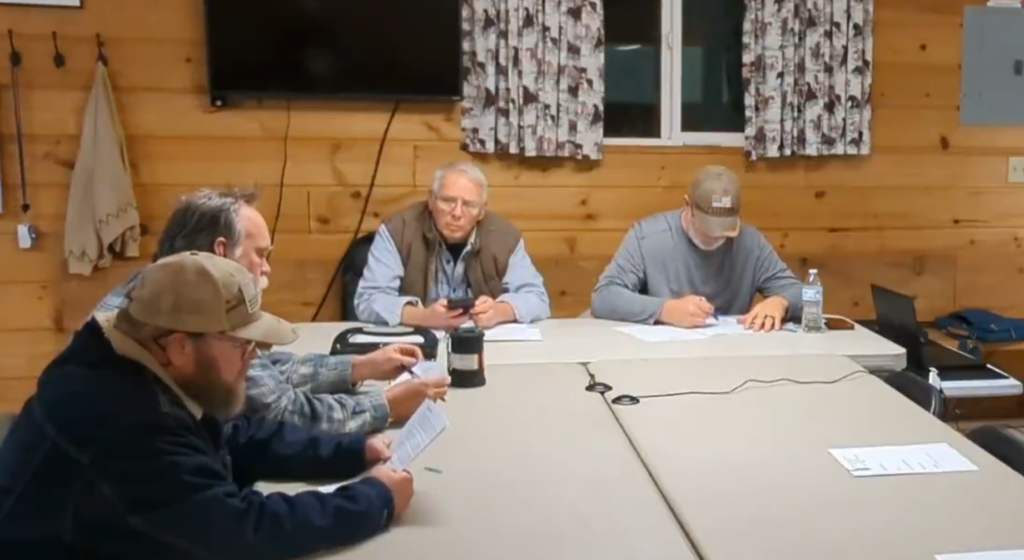
Prineville, Ore. – The Ochoco West Water and Sanitary Authority (OWWSA) continues to face allegations of violating Oregon’s public meetings laws, even as a formal investigation by the Oregon Government Ethics Commission (OGEC) remains underway into the district’s governance and transparency practices.
Recent actions by the OWWSA Board in early January raise renewed concerns and again place its board members in hot water over compliance with core public meetings requirements, including notice, public access, and decision-making outside of noticed meetings.
Between Jan. 6th and Jan. 13th, OWWSA utilized a three-member “hiring subcommittee” to interview candidates and develop a collective recommendation for the full board. The subcommittee consisted of two board members and a district staff member and was created by official board action during a Jan. 6th meeting.
Because the group was appointed by the governing body and delegated collective authority to evaluate candidates and recommend a single choice, the subcommittee meets the statutory definition of a governing body under Oregon law. As such, its meetings were required to comply with public meetings requirements, including advance notice, clear identification of any executive session authority relied upon, and the creation of meeting minutes or recordings, according to information provided by the Oregon Attorney General.
No public notice was provided for the subcommittee’s meeting, nor were any minutes or recordings made publicly available documenting deliberations or decisions prior to the recommendation being presented to the board at its Jan. 13th meeting. The absence of notice and records raises questions about whether deliberations occurred outside of public view in violation of state law.
Additional concerns emerged during the Jan. 13th board meeting, when Board Chair Dan Parks disclosed that a board member originally appointed to the subcommittee, Michael Papin, was unavailable and had been replaced prior to the subcommittee’s meeting. The manner in which that substitution occurred suggests that board members may have engaged in a meeting or serial communications outside of a noticed public meeting.
During the Jan 6th meeting, the board even discussed legal advice it reportedly received that cautioned even having an elected board handling employee hiring positions at all due to the requirements under the meetings law. Although it could do so using an executive session, the board appeared to believe the use of a subcommittee avoided the required public transparency.
The Oregon Attorney General’s guidance clearly outlines the requirements when two or more individuals constitute a “governing body”.
“If two or more members of any public body have ‘the authority to make decisions for or recommendations to a public body on policy or administration,’ they are a ‘governing body’.” says the Oregon Attorney General’s public meetings manual. “For example, a five-member city council and a seven-member licensing board are both governing bodies. In addition, a three-member committee of a seven-member board is itself a ‘governing body’ if it is authorized to make decisions for or to advise the full board or another public body”.
Oregon’s public meetings law also prohibits a quorum of a governing body from making decisions or deliberating toward a decision through private meetings or serial communications. If such communications occurred, they would constitute a separate violation of the statute.
The board has also continued to delay making meeting minutes publicly available. As of late January, OWWSA had not posted minutes or recordings for either its Jan. 6th or Jan. 13th meetings, despite recording both meetings. Under Oregon law, governing bodies are required to make minutes available within a reasonable time, including draft or recorded minutes, and long delays without justification have repeatedly been found unlawful. That timeframe is typically a few days for most moderate and large public bodies or with the use of recorded minutes by all bodies, a reality that post-pandemic has become the standard for most public bodies.
Guidance from the Oregon Attorney General has stated that with written minutes, small public bodies can be provided up to three weeks instead of a few days.
These violations prompted this publication to submit another public meetings grievance, which will require a response by the OWWSA Board. It comes amid other efforts by the Prineville Review as part of its investigation into numerous concerns raised by residents with this publication beginning in 2024, and in October resulted in attorneys for the publication filing a complaint in court after the OWWSA failed to provide records that District Attorney Kari Hathorn ordered released.
As previously reported by the Prineville Review, OGEC investigators identified repeated failures by OWWSA to provide proper meeting notice, deficiencies in agendas and executive session citations, lack of electronic access to meetings, and discussion of prohibited topics during executive sessions. Investigators also noted the district’s ongoing failure to post required grievance information.
The Ethics Commission’s action does not constitute a finding of wrongdoing but authorizes investigators to subpoena records, gather evidence, and determine whether violations occurred and whether penalties or corrective actions are warranted. A full investigative report is expected in the coming months.
OWWSA has not provided a response addressing the January compliance issues as of the time of publication.

Mr. Alderman is an investigative journalist specializing in government transparency, non-profit accountability, consumer protection, and is a subject matter expert on Oregon’s public records and meetings laws. As a former U.S. Army Military Police Officer, he brings a disciplined investigative approach to his reporting that has frequently exposed ethics violations, financial mismanagement, and transparency failures by public officials and agencies.


 continues to face allegations of violating Oregon’s public meetings laws, even as a formal investigation by the Oregon Government Ethics Commission (OGEC) remains underway into the district’s governance and transparency practices.)