Last week, a federal courtroom became the latest venue for examining the conduct of the Alfalfa Fire District and several of its officials and their efforts to silence the press.
After a hearing that lasted most of the day, a U.S. District Court Judge converted the court’s May 13th Temporary Restraining Order into a modified preliminary injunction, finding that the plaintiff (this reporter) demonstrated a likelihood of success on claims that Alfalfa Fire District officials engaged in viewpoint discrimination designed to restrict reporting on the district.
The court’s order not only prevented the Alfalfa Fire District and its officials from adopting policies that limit public meeting access, but also ensured those protections were expanded to the public at large, and not just this reporter.
“[T]he balance of the equities and the public interest weigh in Plaintiff’s favor as explained on the record. It is hereby ordered: The Alfalfa Fire District and any of its officials are enjoined from enforcing or adopting policies that bar the public from participating in the District’s public meetings…” the court ordered.
The court further found that, absent judicial intervention, future violations of First Amendment rights were likely.
Those are significant findings.
But the hearing also highlighted a question that has surrounded this controversy since it began: who was responsible for the decisions that ultimately led to the district attempting to remove a journalist from public property and public meetings?
Who Appeared — and Who Didn’t
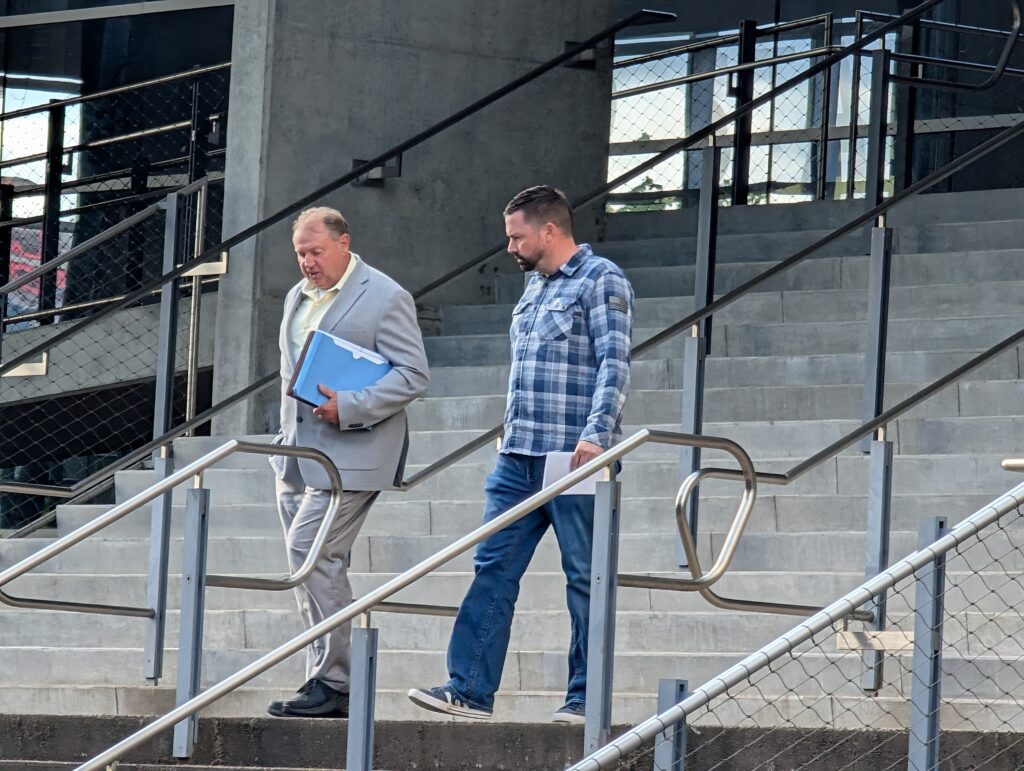
Former Board President Nate Starr, who resigned from the board earlier this month and is no longer an Alfalfa Fire District official, appeared and testified on his own behalf. Current board member Dustin Piggott also appeared and represented himself.

The Alfalfa Fire District itself did not appear through legal counsel. Fire Chief Chad LaVallee did not appear. Board member Mark Laucks did not appear. Several other defendants likewise did not appear to present testimony or evidence regarding the conduct challenged in the lawsuit.
That absence was specifically noted by the court.
In the written order issued following the hearing, the court stated that “several Defendants did not appear as ordered to present any evidence explaining their conduct.”
The significance of that observation cannot be ignored.
The district had already rescinded both the challenged policy and the formal trespass notice before the hearing occurred. Yet despite being given an opportunity to explain why those actions were taken in the first place, many of the officials involved chose not to appear.
The court ultimately concluded that a preliminary injunction remained necessary.
Starr’s Testimony
Much of Starr’s testimony focused on the Prineville Review, its reporting, and this reporter specifically. He repeatedly expressed disagreement with coverage of the district and devoted substantial portions of his testimony to criticizing both the publication and reporting that has examined the district’s conduct over the past two years, particularly reporting concerning Fire Chief Chad LaVallee, as well as Starr’s own actions as board president, including issues related to compliance with Oregon’s public meetings requirements and possible election law violations currently under State investigation.
Starr also directed criticism toward KTVZ’s reporting on the district and, at times, offered broader personal criticisms of the news media generally.
That testimony became particularly significant when the discussion turned to Policy 2026-4, the public meeting adjournment policy adopted on April 8th.
Since the policy’s adoption, district officials have publicly maintained that it was intended to address safety and security concerns surrounding public meetings.
During the hearing, however, Starr repeatedly testified that the policy was adopted in response to conduct and reporting by the plaintiff.
That testimony stood in notable contrast to the district’s previous public explanations.
More importantly, it touched directly on one of the central issues in the lawsuit. The complaint alleged that district officials acted not because of neutral safety concerns, but because of dissatisfaction with this publication, this reporter, published reporting, and even efforts to speak with citizens following public meetings, including those who were critical of Chief Chad LaVallee.
Whether Starr intended to support that allegation or merely explain the board’s reasoning, his testimony repeatedly connected the challenged policy to the conduct and this publication’s reporting.
Questions regarding the consistency of those explanations also surfaced during the proceedings. In filings submitted by Starr immediately before the hearing, Starr asserted that he had “NEVER had contact with Attorney JERED REID” regarding the matters involved in the case. Yet exhibits attached to that same filing included email communications showing Starr participating in discussions regarding the proposed trespass notice and responding that the district had “the backing of a lawyer to back it up.”
The emails also raise separate questions regarding district governance. In one exchange, Chief Chad LaVallee asked how district leadership wished to proceed regarding the proposed trespass notice. Starr’s responses suggest he was involved in discussions surrounding the district’s course of action.
As board president, Starr held no greater voting authority than any other member of the board. Public meeting records reviewed by the Prineville Review have not identified any publicly discussed board action delegating unilateral authority to Starr to approve or direct such actions on behalf of the district. Nor do publicly available meeting records appear to show any board discussion authorizing the preparation of the trespass notice itself.
The exhibit provided by Starr in his last-minute filing also raised questions about his access to district resources, as it showed Starr forwarding emails from his official district account at least several days after he had resigned back on May 13th.
Whether those issues ultimately prove significant is for the court to determine. However, they reflect a recurring theme that has followed this controversy from the beginning: public explanations have not always aligned neatly with documents, records, or testimony that later emerged.
Questions That Remain Unanswered
The hearing also underscored broader questions about how the district’s actions came to be.
The challenged policy appeared on the April 8th meeting agenda with little public discussion preceding its adoption. Public records reviewed by this publication have not revealed any publicly noticed board discussions directing staff to draft the policy before it appeared for approval.
Similarly, questions remain regarding the district’s engagement of attorney Jered Reid and the events leading to the issuance of the formal trespass notice on April 27th.
Public meeting records reviewed by the Prineville Review have not identified any publicly discussed board action authorizing the preparation of the trespass notice or directing legal counsel to undertake that action.
Those questions may ultimately have little bearing on the constitutional claims before the federal court. They do, however, raise separate questions about transparency, governance, and how significant district decisions were made.
Tuesday’s hearing provided an opportunity for district officials to address those questions.
Most did not.
The Court’s Concerns Didn’t End With Rescission
One of the central issues before the court was whether the district’s decision to rescind the policy and withdraw the trespass notice had rendered the dispute moot.
The federal judge concluded it had not.
In explaining the need for a preliminary injunction, the court specifically referenced concerns about future conduct.
“The Court finds that at least one Defendant, Chief LaVallee, is considering further action against Plaintiff, and in the absence of an order enjoining Defendants’ conduct there is a high likelihood Plaintiff’s First Amendment rights will be violated.”
That finding is particularly noteworthy because it concerns future conduct, not merely past actions.
The court did not simply find that constitutional violations may have occurred against this reporter. It found a sufficient likelihood of future violations to justify continued federal intervention.
Why This Matters
The underlying lawsuit remains unresolved.
The defendants remain entitled to contest the allegations against them, present evidence, and defend their actions as the case proceeds.
But one conclusion has already been reached.
A federal judge has found a likelihood that Alfalfa Fire District officials engaged in viewpoint discrimination and that future violations of constitutional rights remain likely enough to warrant injunctive relief.
That conclusion came after a full day of testimony and after the defendants were given an opportunity to explain their actions.
Several chose not to do so.
The court took notice.
So should the public.

Mr. Alderman is an investigative journalist specializing in government transparency, non-profit accountability, consumer protection, and is a subject matter expert on Oregon’s public records and meetings laws. As a former U.S. Army Military Police Officer, he brings a disciplined investigative approach to his reporting that has frequently exposed ethics violations, financial mismanagement, and transparency failures by public officials and agencies.